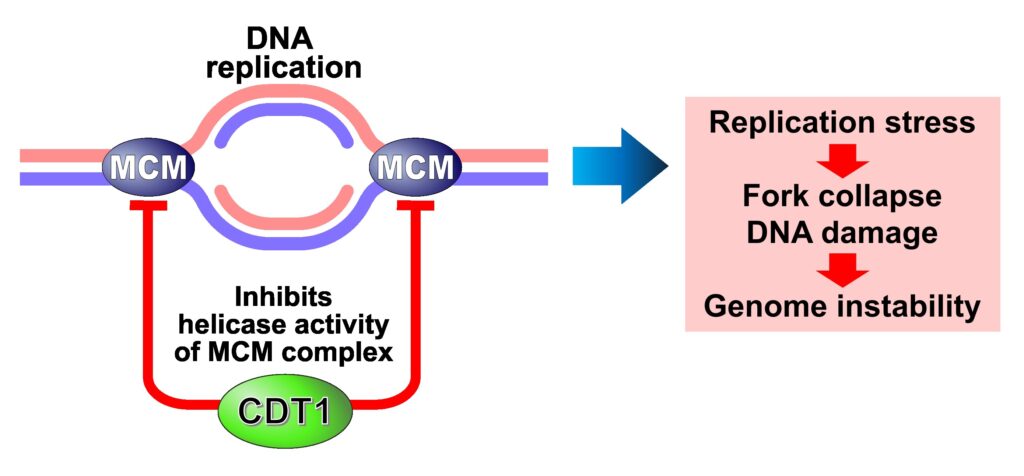
CDT1 inhibits the helicase activity of the MCM complex, thereby
suppressing nascent strand synthesis in DNA replication in cultured
human cells. This action results in fork collapse and DNA damage,
potentially causing genomic instability.
Summary:
During the initiation of DNA replication, the mini-chromosome maintenance (MCM) complex, a DNA helicase, binds to replication origins and promotes replication fork progression. The replication fork may stall due to various factors, and prolonged stalling may cause DNA breaks, resulting in cell death or cancer. Although CDT1 plays an essential role in loading the MCM complex onto replication origins, its overexpression has been implicated in oncogenesis. However, the underlying mechanism remains unclear. By analyzing various CDT1 mutants and establishing cell lines with inducible CDT1 overexpression, the research group demonstrated that CDT1 overexpression suppresses replication fork progression and induces DNA damage. These findings reveal a novel function of CDT1 in DNA replication and provide molecular insights into the oncogenic process triggered by its overexpression.
Journal:
FEBS Open Bio (Online publication: September 26, 2025)
Article Title:
Overexpression of CDT1 inhibits cell cycle progression at S phase by interacting with the mini-chromosome maintenance complex and causes DNA damage
Authors:
Takashi Tsuyama, Nonoka Takayama, Rina Tanaka, Yuuki Arai, Yohko Yamaguchi, Yuko Nawata, Yutaro Azuma, Shusuke Tada*
DOI:
10.1002/2211-5463.70127


.jpg)