TOPICS
DATE
January 7, 2026
SHARE
January 7, 2026

Development of a HepaRG Human Hepatocyte Model with Enhanced CYP2D6 Activity

Toward Early Prediction of Drug-Induced Liver Injury and a Promising Alternative to Animal Testing

Dr. Shinpei Yamaguchi
A research team led by Associate Professor Shinpei Yamaguchi and the late Professor Masako Tada of the Faculty of Science, together with Professor Yojiro Anzai and Lecturer Yohei Iizaka of the Faculty of Pharmaceutical Sciences at Toho University, have developed a new HepaRG cell line with markedly enhanced activity of CYP2D6, a major drug-metabolizing enzyme. This engineered human hepatocyte model enables more human-relevant evaluation of drug-induced hepatotoxicity mediated by CYP2D6. The findings were published in the international journal PLOS ONE on December 29, 2025.
Dr. Shinpei Yamaguchi
A research team led by Associate Professor Shinpei Yamaguchi and the late Professor Masako Tada of the Faculty of Science, together with Professor Yojiro Anzai and Lecturer Yohei Iizaka of the Faculty of Pharmaceutical Sciences at Toho University, have developed a new HepaRG cell line with markedly enhanced activity of CYP2D6, a major drug-metabolizing enzyme. This engineered human hepatocyte model enables more human-relevant evaluation of drug-induced hepatotoxicity mediated by CYP2D6. The findings were published in the international journal PLOS ONE on December 29, 2025.
Key Points
  • Establishment of a next-generation hepatocyte model with metabolic capacity comparable to adult human liver tissue
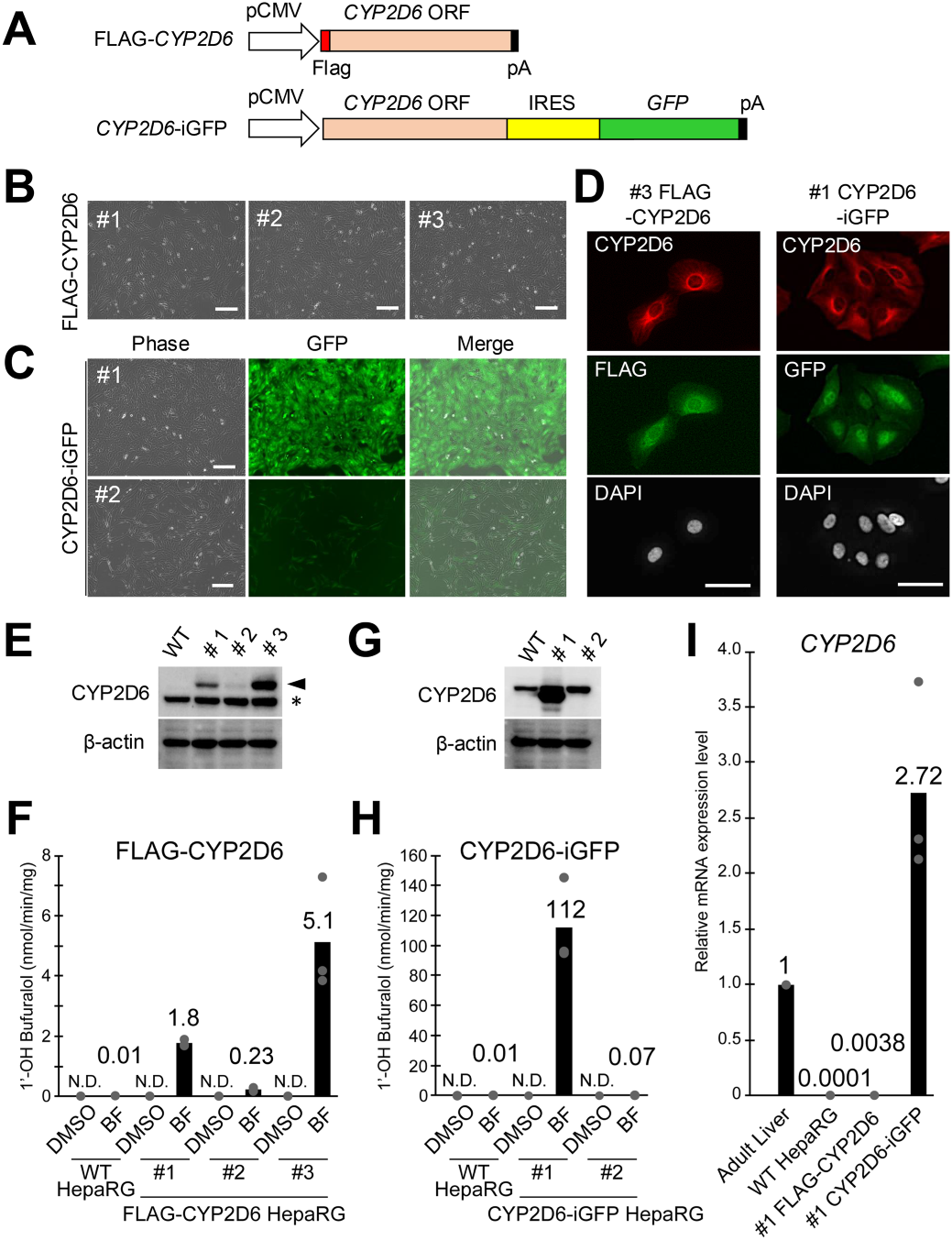
    By enhancing CYP2D6 metabolic activity to approximately 8,000-fold relative to conventional HepaRG cells, the team successfully reproduced expression levels comparable to adult human liver tissue in vitro.
  • Robust model with practical utility, achieved through green fluorescent protein (GFP) visualization and stable functional maintenance
    GFP co-expression enabled real-time monitoring of CYP2D6 expression, and high expression levels were maintained even after differentiation into hepatocyte-like cells, allowing detailed tracking of complex drug responses.
  • Implications for early prediction of drug toxicity and an alternative to animal testing
    Experiments with perhexiline, a drug primarily metabolized by CYP2D6, demonstrated improved cell viability in the CYP2D6-enhanced HepaRG cell model. This system facilitates prediction of toxicity associated with inter-individual variability in human CYP2D6 activity, which is difficult to reproduce in animal models, thereby supporting early-stage drug safety assessments and serving as a promising in vitro alternative to animal testing.

Figure 1: Establishment and characterization of FLAG-CYP2D6 and CYP2D6-iGFP undifferentiated HepaRG cells.

Journal:
PLOS ONE

Title:
Development of a CYP2D6-enhanced HepaRG Cell Model with Improved CYP2D6 Metabolic Capacity

Authors:
Chizuka Obara, Yohei Iizaka, Akari Mine, Yojiro Anzai, Masako Tada*, and Shinpei Yamaguchi*

Published:
December 29, 2025

DOI:
https://doi.org/10.1371/journal.pone.0339559

READ MORE RESEARCH NEWS - SCIENCE

@ Toho University