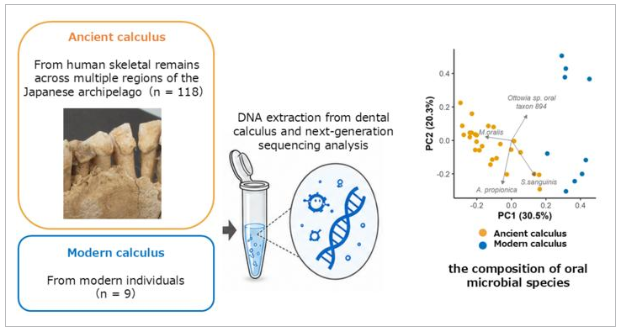
A research group led by Toho University analyzed microbial DNA preserved in dental calculus from ancient human skeletal remains excavated across the Japanese archipelago, primarily dating to the Edo period, and characterized features of past oral microbiomes. The results revealed that the composition of oral microorganisms preserved in ancient dental calculus differed from that found in modern dental calculus, and that certain bacterial lineages varied according to both region and historical period. Furthermore, a phylogenetic analysis of the periodontal disease-associated archaeon Methanobrevibacter oralis showed that all M. oralis strains derived from female individuals previously reported to exhibit traces of ohaguro (tooth blackening) belonged to the same clade.
These findings demonstrate that even trace amounts of DNA preserved in dental calculus can provide valuable new clues for investigating the dietary habits, regional characteristics, and cultural practices of past populations, as well as the historical relationships between humans and microorganisms in the Japanese archipelago.